
Technology Is Not the Problem
Veterinary practices don't have a technology shortage. Most have plenty. What they're short on is technology that works together. The problems show up between systems, and that's rarely an IT problem to fix.
By Adam Zilberman2 min read
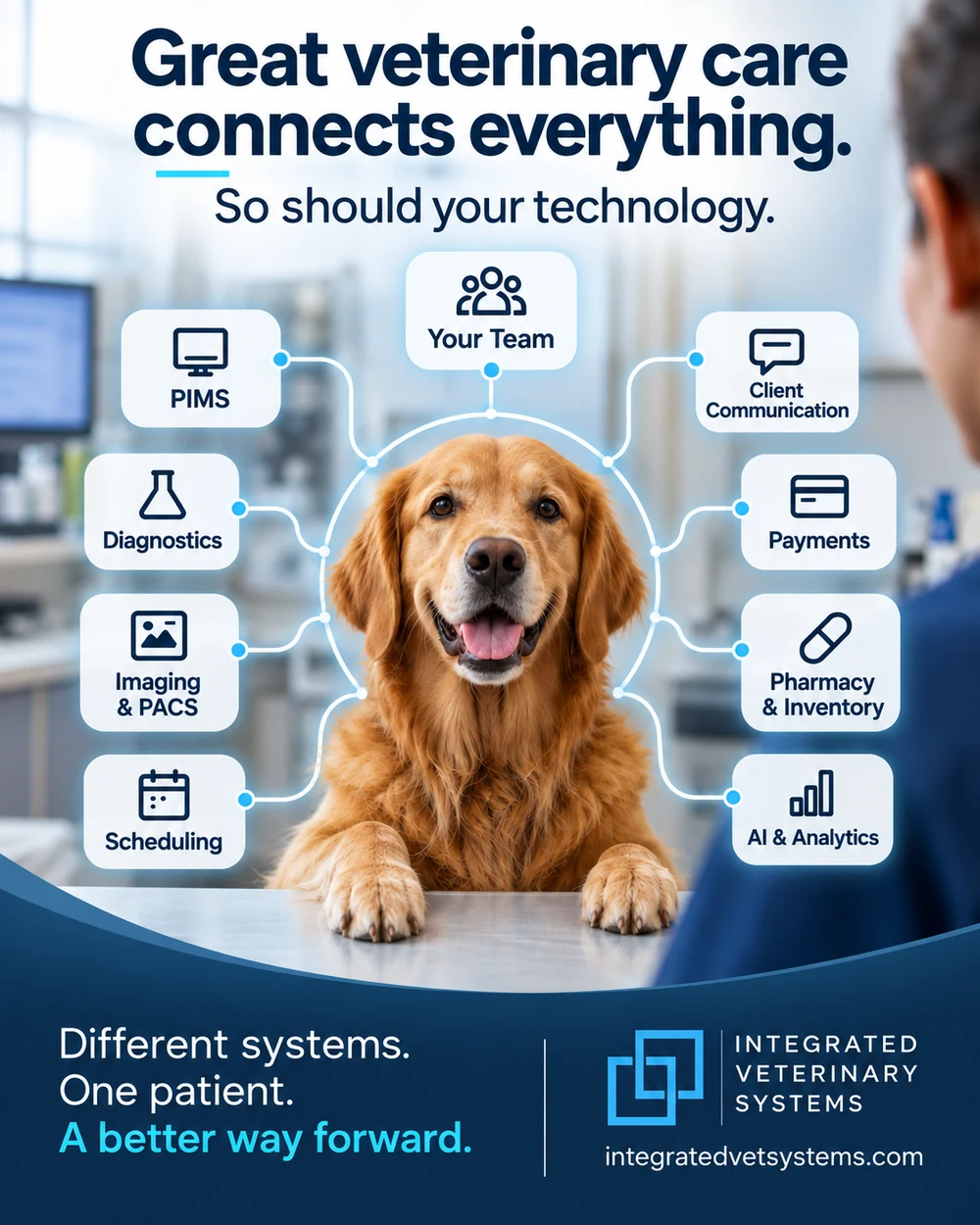
Veterinary practices don't have a technology shortage. Most have plenty.
What they're short on is technology that works together.
The PIMS does its job. So do the lab systems, imaging and PACS, client communications, scheduling, payments, pharmacy, inventory and now AI.
The problems often show up between them: duplicate entry, PDFs moved by hand, separate logins, manual workarounds, and patient information that doesn't follow the patient. Staff end up filling the gaps.
When the system isn't the problem
In one workflow I'm working on right now, information is collected digitally from the client, but getting it into the right place in the patient record still requires someone to move it by hand. The individual systems aren't the problem. It's the handoff between them. Replacing the software alone wouldn't fix that.
And it isn't necessarily an IT problem.
A hospital or group can have a capable internal IT team or MSP keeping systems secure, available and supported. But someone still needs to look across the clinical and operational environment with leadership and determine whether it all works together the way the organization needs. That kind of cross-system, cross-functional perspective is what integration and interoperability work is really about.
What AI raises the stakes on
AI raises the stakes. As it moves beyond documentation into clinical decision support, scheduling, diagnostics and client communication, its value depends on what the surrounding systems can actually support.
An organization whose systems already disagree with each other will not get reliable results from a tool built on top of them. That is why AI readiness is, in large part, a data flow and governance question rather than a procurement question.
The questions I look at
A few of the questions I look at:
- What has to be re-entered, exported, uploaded or moved by hand for the workflow to continue?
- Where does the workflow break between systems?
- Does the integration solve the workflow, or just connect two applications?
- What happens downstream when one system is changed or replaced?
- Are we solving the right problem before adding another tool?
Sometimes the answer is new technology. Sometimes it's better integration, workflow design, configuration or implementation of what's already there.
The work
That's the work I'm doing through Integrated Veterinary Systems: sitting alongside leadership, operations, internal IT, MSPs and vendors to map what's happening today, identify where it breaks, test the options and assumptions together, and decide what to add, what to fix and how it should all fit.
The goal isn't to make the technology decision for the organization. It's to help the organization make a better one.
If you're working through something similar, I'm always interested in comparing notes. A free 30-minute conversation is usually enough to name what's going on and what a practical next step looks like.
About the author
Adam Zilberman leads Integrated Veterinary Systems, an independent advisory practice for veterinary organizations working through clinical systems, integrations, imaging, AI adoption, and implementation. He has spent more than 20 years in veterinary technology and operations across independent and multi-site environments.